
Understanding Rodents
Rodents belong to the order Rodentia, a remarkably varied group of mammals defined most notably by incisor teeth that never stop growing. Their diets range from strictly plant-based to fully omnivorous, and they reproduce quickly, which lets them establish themselves in new surroundings in short order. That adaptability is exactly why they show up everywhere from forests and deserts to the inside of a house.
Which Animals Count as Rodents?
Rats and mice are the rodents homeowners deal with most, but the family is much larger. Common examples include:
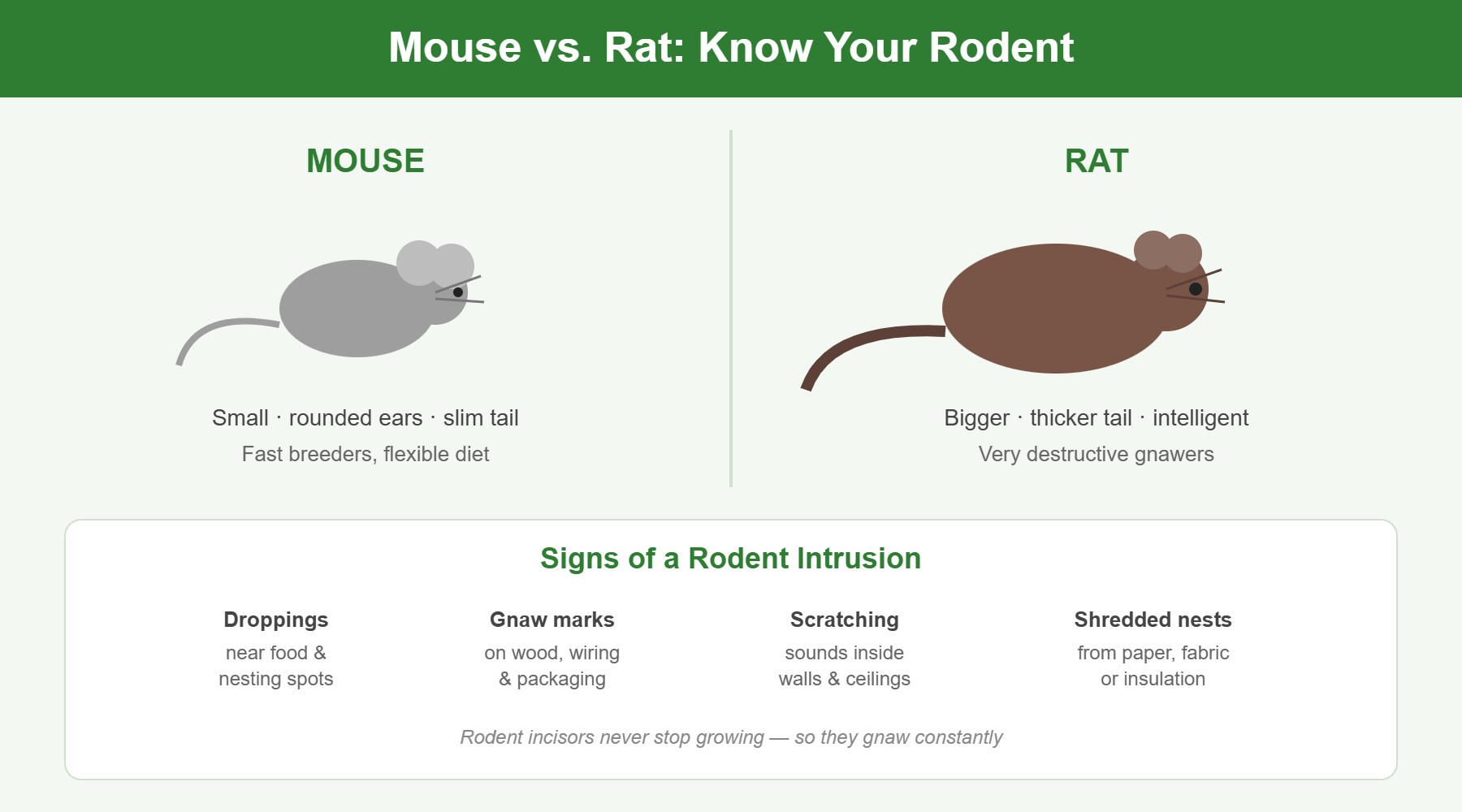
- Mice — small, with rounded ears and slim tails, fast breeders with flexible diets.
- Rats — bigger than mice, with thicker tails, intelligent, and very destructive gnawers.
- Gophers and groundhogs — burrowers whose tunnel systems can tear up lawns, gardens, and even foundations.
- Squirrels — agile climbers that sometimes get into homes and chew insulation and wiring.
Worth noting: not every small furry animal is a rodent. Bats, rabbits, and raccoons all belong to entirely different groups.
What Rodents Eat
Rats and mice are opportunistic omnivores, which helps them flourish both in the wild and in cities. Mice lean toward seeds and grains but will eat insects or small animals when needed, and rats readily consume fruits, nuts, and just about anything else available. This willingness to eat almost anything is part of what makes a home so appealing to them.
Ready for Pest-Free Living?
Call now to be connected with a licensed pest control provider who may assist with inspections, treatment options, and pest management services.
Call Now: (855) 560-1396Where Rodents Live
Rodents adapt to a huge range of habitats. In urban settings they have become skilled at sharing space with people, hiding inside attics, basements, and wall cavities. Out in nature, they dig burrows or build nests in forests, fields, and deserts, foraging from whatever surrounds them.
What Draws Them Indoors — and the Signs
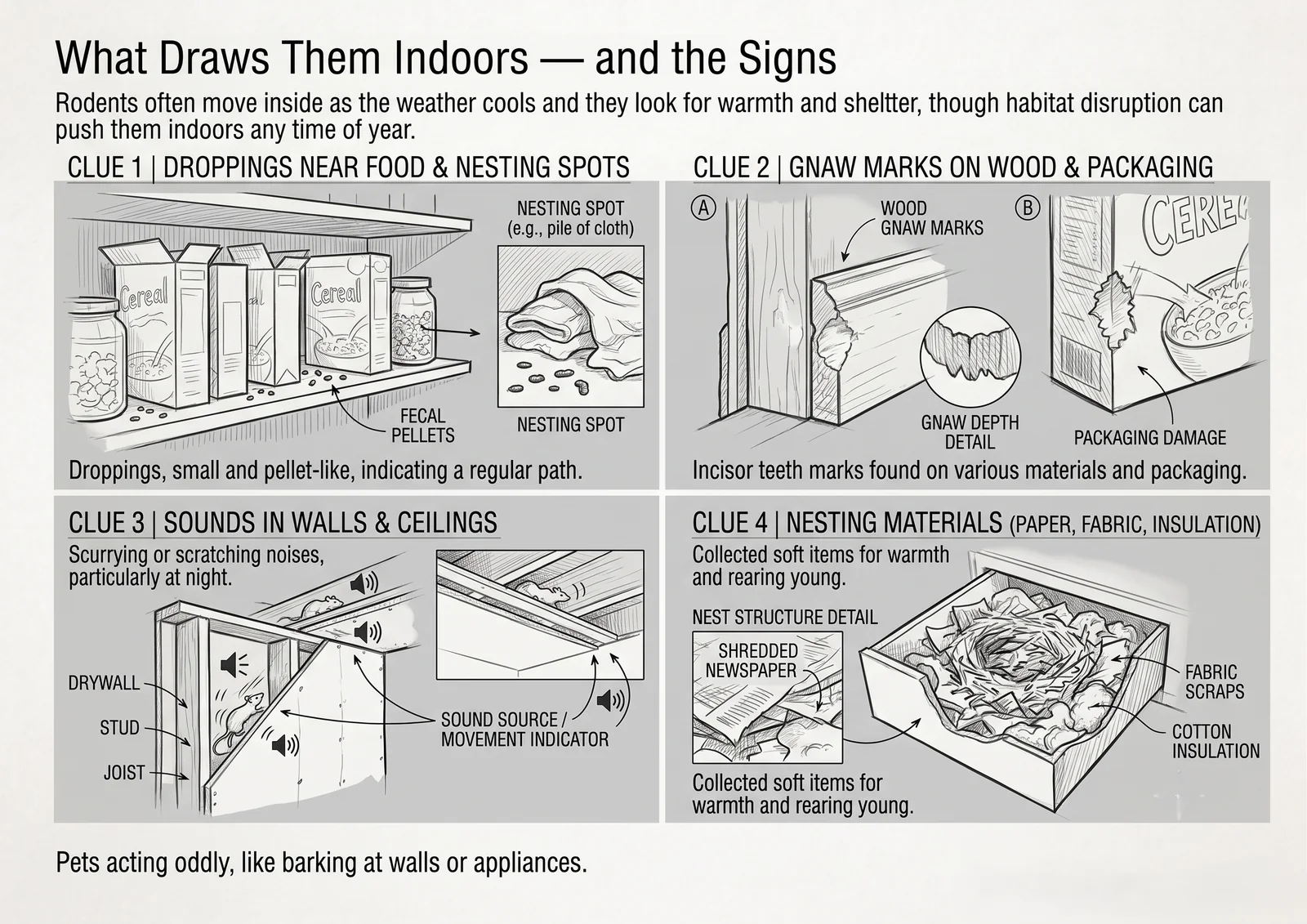
Rodents often move inside as the weather cools and they look for warmth and shelter, though habitat disruption can push them indoors any time of year. Telltale signs of an intrusion include:
- Droppings near food or nesting spots
- Gnaw marks on wood, wiring, or packaging
- Scratching or scurrying sounds inside walls and ceilings
- Nests built from shredded paper, fabric, or insulation
- Pets acting oddly, like barking at walls or appliances
Which Rodents Are Dangerous?
Many rodents pose little direct risk, but some carry real concerns. Rats can spread illnesses such as Hantavirus and Leptospirosis through bites or contact with their urine, droppings, or saliva, and mice can transmit Salmonella and Hantavirus the same way. Gophers and groundhogs rarely spread disease but can cause serious structural and landscape damage through burrowing.
How Aegis Handles Rodents and Mice
Rats and mice can become a major problem fast, threatening both property and health. Do-it-yourself fixes tend to fall short on thoroughness and lasting results. Our participating providers offer comprehensive rodent control tailored to your situation, whether you’re battling fast-breeding mice, destructive rats, or another unwelcome guest. The sooner you schedule an inspection, the sooner you can put the problem behind you.
Ready for Pest-Free Living?
Call now to be connected with a licensed pest control provider who may assist with inspections, treatment options, and pest management services.
Call Now: (855) 560-1396