
What Are Mosquitoes?
Mosquitoes are small flying insects in the family Culicidae, and they are technically parasites — at least the females are, since they need a blood meal to produce eggs. Males, by contrast, feed only on nectar and plant sugars. Despite their reputation, mosquitoes do serve a purpose in nature, providing food for birds, fish, and other insects.
What They Look Like
Adult mosquitoes are usually muted gray or brown and measure between a quarter and a half inch long. They have six legs, segmented bodies with a head, thorax, and abdomen, and two clear wings that produce their signature buzz. The long, needle-like mouthpart called a proboscis is used to feed on nectar or, in females, to draw blood. One easy distinction: only females can pierce skin and bite, while males generally have bushier antennae but cannot.
The Mosquito Life Cycle
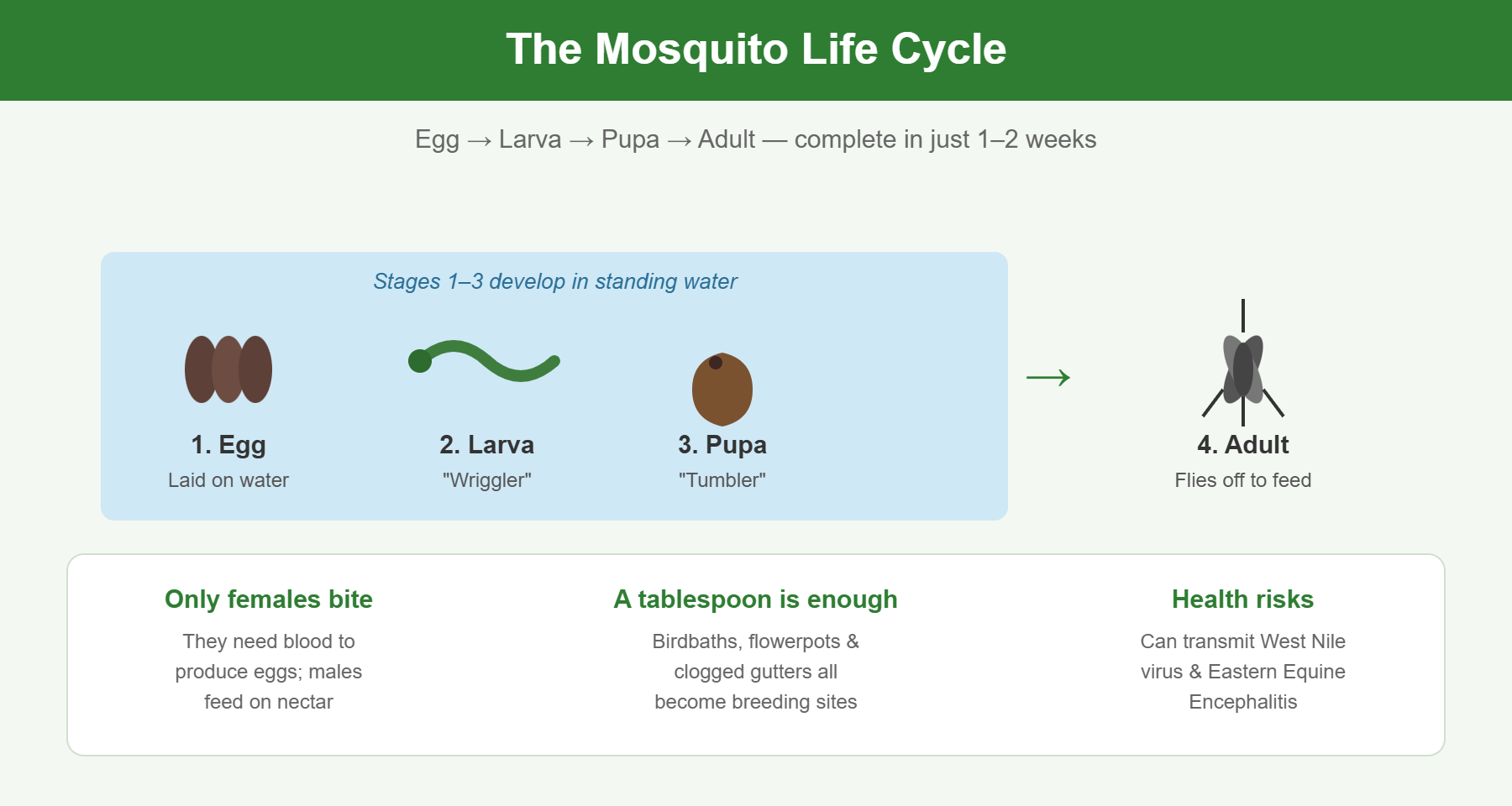
Mosquitoes pass through four stages — egg, larva, pupa, and adult — and under ideal conditions the whole cycle can wrap up in just one to two weeks. Eggs are laid on or near standing water, larvae and pupae develop in that water, and the emerging adults fly off to feed and reproduce. Most adults live only a few weeks to a month.
Where They Breed and Live
Standing or slow-moving water is essential for breeding. Ponds, ditches, and marshes work, but so do birdbaths, flowerpots, and clogged gutters — a single tablespoon of water is enough. Mosquitoes live in every U.S. state, favoring warm, humid spots. Outdoors they rest in tall grass, shrubs, and shaded areas during the day; indoors they may tuck into dark corners, closets, or basements.
Ready for Pest-Free Living?
Call now to be connected with a licensed pest control provider who may assist with inspections, treatment options, and pest management services.
What Attracts Mosquitoes
Several cues draw mosquitoes toward a host, including the carbon dioxide we exhale, body heat and sweat, certain skin bacteria and odors, dark clothing, and movement. They also seek out standing water for laying eggs. Home remedies built on citronella, peppermint, eucalyptus, or lavender may offer brief relief, but their effect is usually short-lived compared with professional treatment.
Why Some People Get Bitten More
Not everyone is equally appealing to mosquitoes. Blood type, body temperature, carbon dioxide output, and the natural bacteria on your skin all play a part, and people who are active or sweating outdoors tend to attract more attention.
Keeping Mosquitoes Away
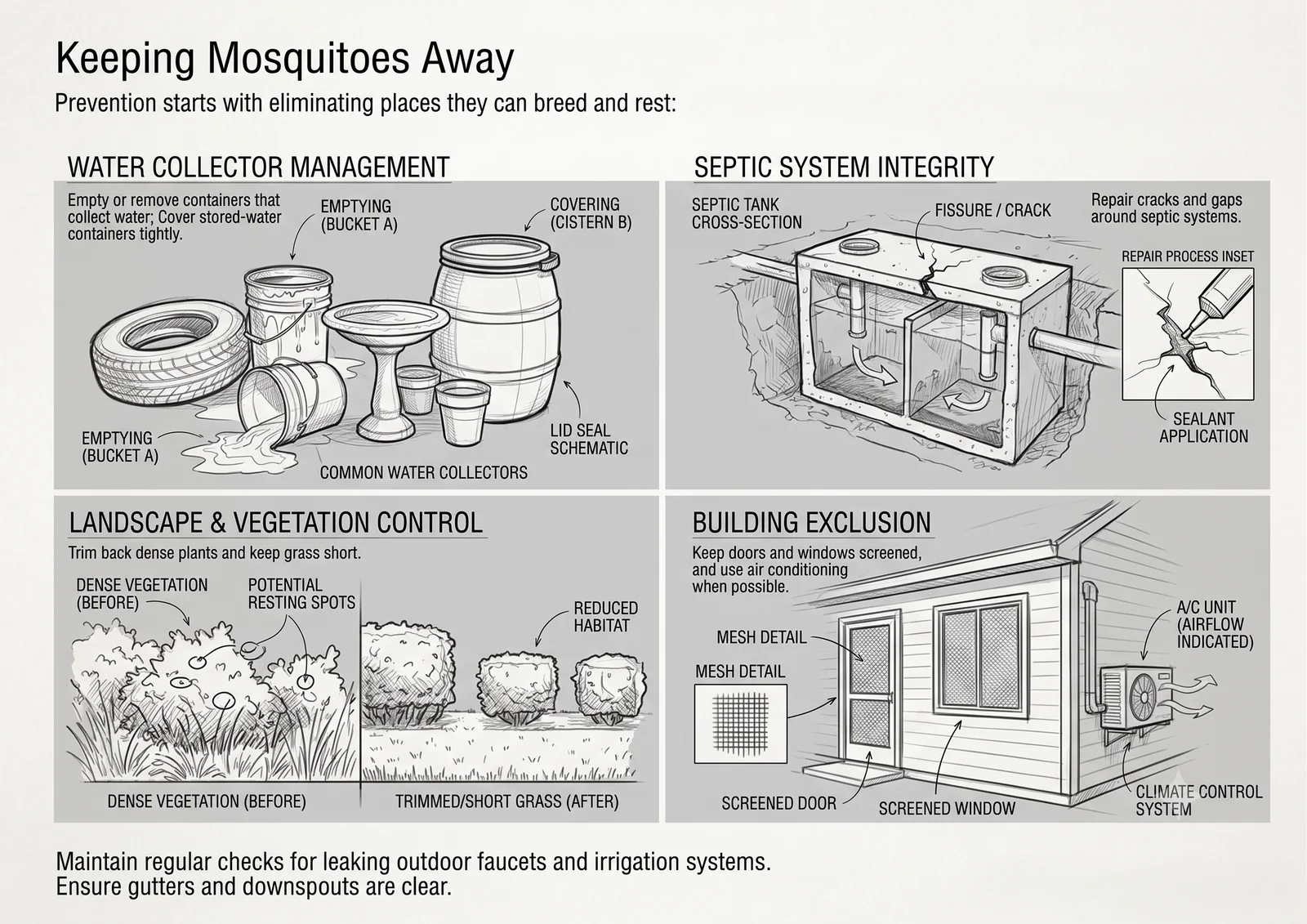
Prevention starts with eliminating places they can breed and rest:
- Empty or remove containers that collect water
- Repair cracks and gaps around septic systems
- Cover stored-water containers tightly
- Trim back dense plants and keep grass short
- Keep doors and windows screened, and use air conditioning when possible
Bites, Symptoms, and Health Risks
Most bites trigger a mild reaction to the mosquito’s saliva — small itchy bumps, redness, and slight swelling that may grow more irritating over a few days. Some people experience stronger allergic responses with larger welts. More seriously, mosquitoes can transmit diseases such as West Nile virus and Eastern Equine Encephalitis, and repeated bites can lead to skin infections from scratching.
How Aegis Handles Mosquitoes
Mosquitoes can quickly make a backyard unusable. Our participating providers can target both adult mosquitoes and the breeding sites where new ones develop — standing water, shaded landscaping, and dense foliage. By reducing current populations and interrupting the life cycle, they help keep your outdoor spaces comfortable again.
Ready for Pest-Free Living?
Call now to be connected with a licensed pest control provider who may assist with inspections, treatment options, and pest management services.