
Getting to Know Cockroaches
Cockroaches are tough, adaptable insects that do well in all sorts of settings, especially dark, damp ones. Because they reproduce rapidly and tuck themselves into cracks and crevices, an infestation can balloon in a hurry if it’s ignored. Spotting early clues — droppings, shed skins, a musty smell — gives you the best chance of dealing with the problem before it gets out of hand.
What Cockroaches Look Like
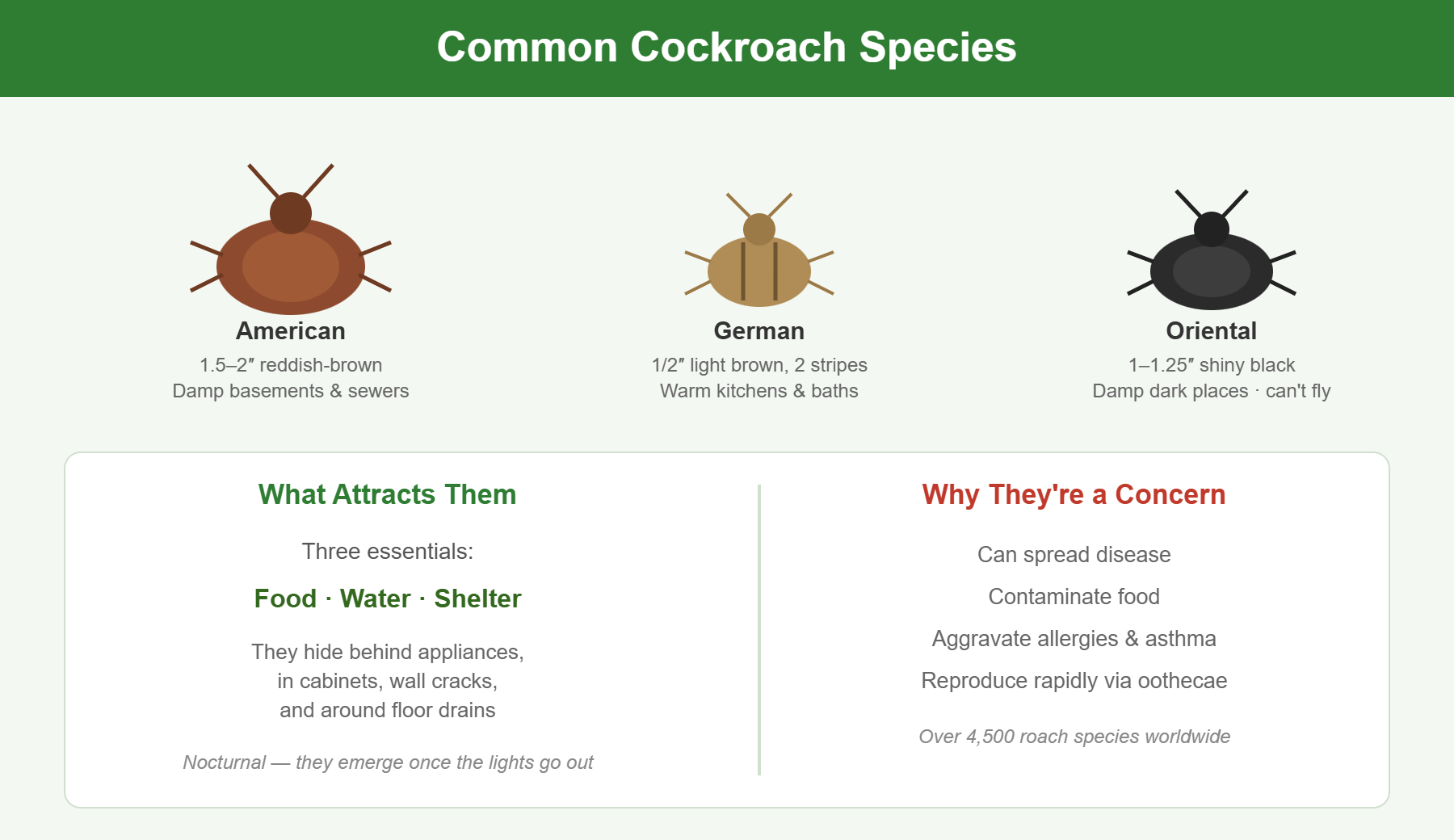
Appearance varies by species, but roaches generally share a few features. Their bodies are flat and oval, paired with long antennae and six legs. Sizes run from about half an inch up to three inches, and colors typically range from reddish-brown to dark brown or black. Many have wings, though not every species can actually fly.
The Most Common Species
- American cockroach — one of the largest, around 1½ to 2 inches, reddish-brown, and a scavenger of damp areas like basements and sewers.
- German cockroach — small (½ to ⅝ inch), light brown with two dark back stripes, a fast breeder that favors warm, humid kitchens and bathrooms.
- Brown-banded cockroach — a small species about half an inch long, light brown with two bands, partial to warm and dry spots.
- Oriental cockroach — shiny black, roughly 1 to 1¼ inches, fond of damp, dark places and unable to fly.
These are the headliners, but there are over 4,500 roach species worldwide, including Asian, Australian, Cuban, and wood cockroaches.
The Cockroach Life Cycle
Roaches develop through egg, nymph, and adult stages. Females deposit eggs in protective cases called oothecae, which hatch into nymphs that molt repeatedly until they mature and can reproduce. Lifespan depends on the species and on factors like food, temperature, and humidity, but most adults live several months to about a year in good conditions.
Ready for Pest-Free Living?
Call now to be connected with a licensed pest control provider who may assist with inspections, treatment options, and pest management services.
Call Now: (855) 560-1396What Attracts Cockroaches
It comes down to three essentials: food, water, and shelter. As omnivores, roaches will eat crumbs, garbage, organic matter such as dead skin, and even materials like cardboard and clothing. For shelter they seek warm, humid, cluttered hiding places — behind appliances, inside cabinets, in wall cracks, among stacked boxes or newspapers, and around floor drains. They generally enter through gaps in walls, floors, and foundations, around doors and windows, via shared walls, or by hitching a ride on groceries and boxes.
Where They Hide
Roaches stay close to dependable water, so kitchen and bathroom plumbing draws them in. Indoors you’ll find them in cupboards, under sinks, in drains, behind appliances, and within wall cracks. Outdoors they shelter in tree trunks, shrubbery, sewers, drainpipes, and garbage cans. Being nocturnal, they hide by day and emerge once the lights go out.
What to Do If You See One
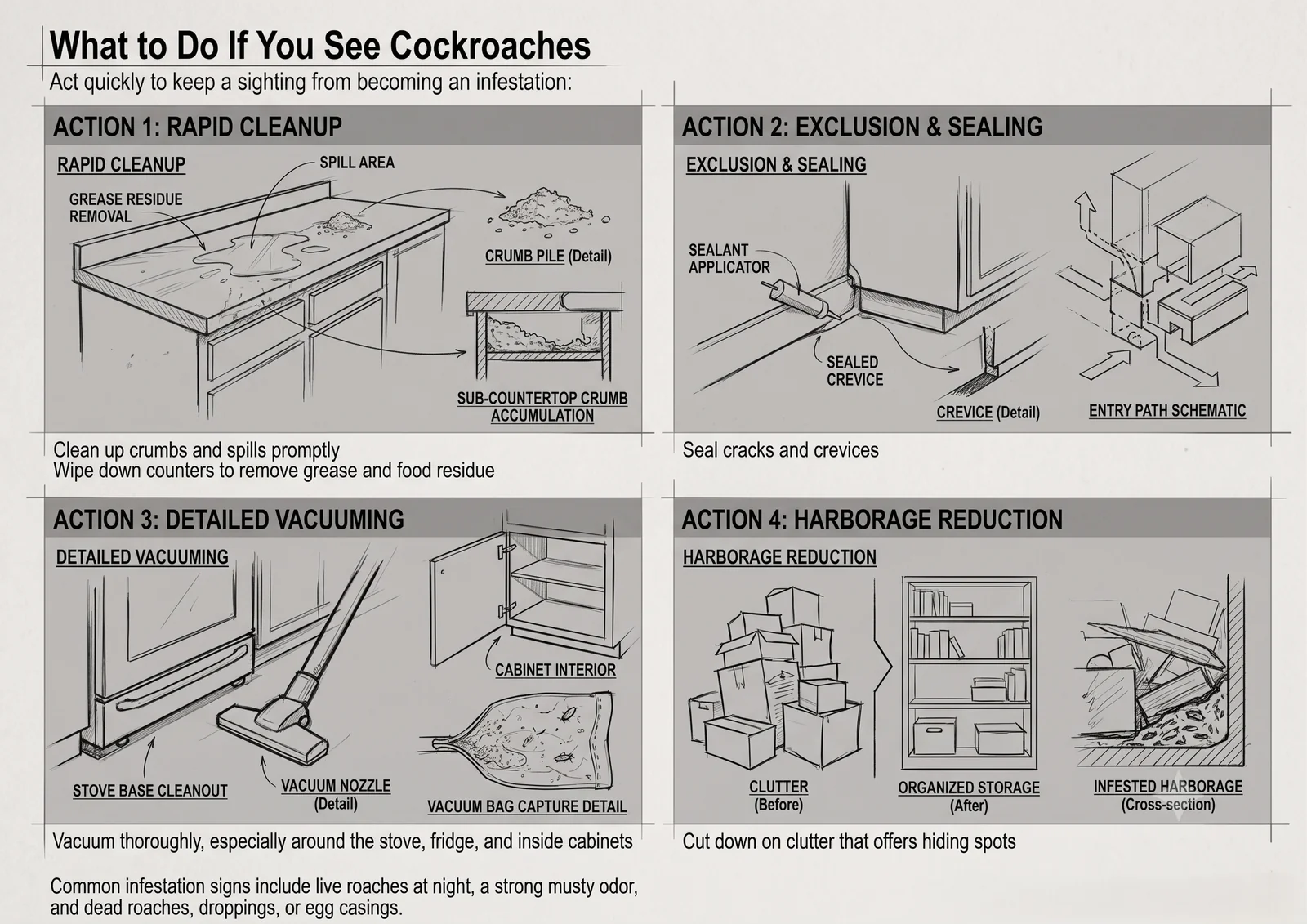
Act quickly to keep a sighting from becoming an infestation:
- Clean up crumbs and spills promptly
- Seal cracks and crevices
- Vacuum thoroughly, especially around the stove, fridge, and inside cabinets
- Cut down on clutter that offers hiding spots
- Wipe down counters and appliances to remove grease and food residue
Common infestation signs include live roaches at night, a strong musty odor, and dead roaches, droppings, or egg casings.
Are Cockroaches Dangerous?
Yes — roaches can spread disease, contaminate food, and aggravate allergies and asthma. They rarely bite, but may do so when threatened or short on food, often targeting sleeping people. Because of these health risks, it’s wise to address an infestation as soon as possible.
How Aegis Handles Cockroaches
Roach infestations are notoriously hard for homeowners to clear on their own. Our participating providers can provide thorough treatment to remove the roaches living in your home and put a plan in place to help keep future infestations from taking root.
Ready for Pest-Free Living?
Call now to be connected with a licensed pest control provider who may assist with inspections, treatment options, and pest management services.
Call Now: (855) 560-1396