
What Are Bed Bugs?
Bed bugs are small parasitic insects that survive on blood, usually human. They feed mostly at night and leave behind itchy red marks or bumps. Found all over the world, they settle in close to where people sleep — mattresses, box springs, bed frames, headboards, couches, and even reclining chairs.
How to Identify Them
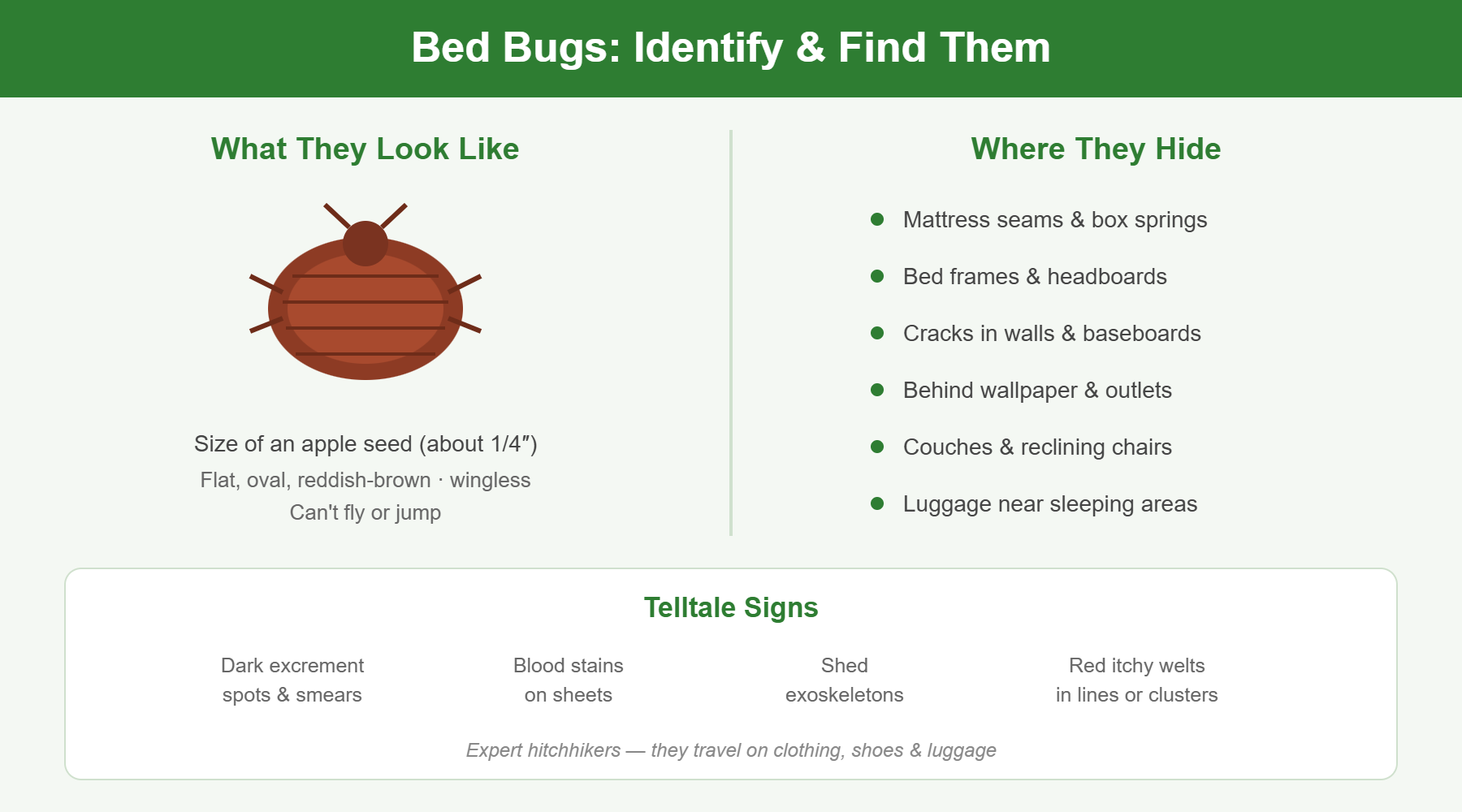
Adult bed bugs are roughly the size of an apple seed, about a quarter to three-sixteenths of an inch long. They are wingless, so they neither fly nor jump. Their flat, oval, brown to reddish-brown bodies let them wedge into remarkably tight spaces.
Life Cycle and Biology
Bed bugs develop through three stages — egg, nymph, and adult. Eggs are pinhead-sized and pale, laid in clusters, with a female producing around 100 over her lifetime. Nymphs look like smaller, lighter adults and must feed on blood to molt through five stages. Adults can live from several months to over a year depending on temperature, food availability, and conditions, and the journey from egg to adult takes about 37 days when circumstances are ideal. Of the roughly 90 known species, only three feed on humans, with Cimex lectularius being by far the most common.
Feeding Habits
These nocturnal insects feed mainly on human blood, though they’ll bite animals if no person is available. They’re drawn to warmth, carbon dioxide, and our individual chemical scent, which is why they so often bite while we sleep. After feeding, they slip back into their hiding spots.
Where Bed Bugs Hide
Beyond beds, bed bugs tuck into nearby furniture, cracks and crevices in walls, floors, baseboards, and carpet, behind wallpaper, inside electrical outlets, and within luggage left near sleeping areas. Essentially any small, dark, secluded spot close to where people rest is fair game.
Ready for Pest-Free Living?
Call now to be connected with a licensed pest control provider who may assist with inspections, treatment options, and pest management services.
Call Now: (855) 560-1396What Causes a Bed Bug Problem
Bed bugs spread through human activity — traveling, picking up infested items, or moving homes. As accomplished hitchhikers, they cling to clothing, shoes, and luggage. Shared-wall living such as apartments raises the risk, since they slip between units through small gaps, and high-traffic places like hotels and taxis act as transfer points.
Signs of Bed Bugs
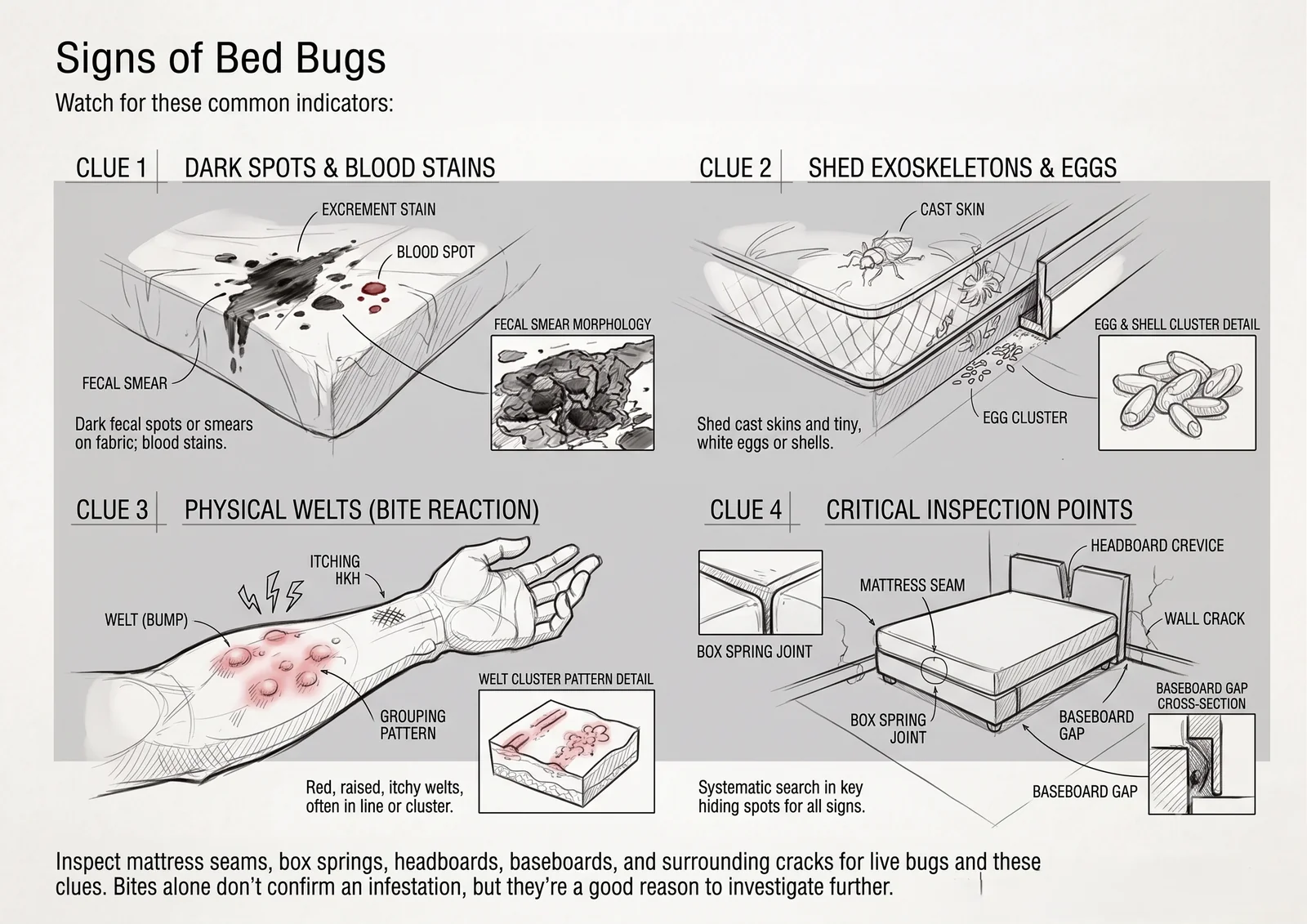
Watch for these common indicators:
- Dark spots or smears from excrement on bedding, frames, or walls
- Blood stains on sheets or clothing
- Shed exoskeletons
- Tiny eggs or eggshells along mattress seams and crevices
- Red, itchy welts on the skin, often arranged in a line or cluster
Inspect mattress seams, box springs, headboards, baseboards, and surrounding cracks for live bugs and these clues. Bites alone don’t confirm an infestation, but they’re a good reason to investigate further.
Bites and Symptoms
Bites usually show up as small red welts in zigzag lines or clusters and may itch or feel irritated, though some people react little or not at all. Bed bugs aren’t known to transmit disease, but an infestation can be genuinely disruptive and stressful.
Prevention and First Steps
To reduce your risk, inspect regularly for stains and shed skins, check hotel rooms before unpacking and keep luggage elevated, and seal cracks around baseboards and walls. If you spot bed bugs, avoid moving items between rooms, vacuum affected areas and dispose of the contents in a sealed bag, and wash and dry fabrics on the highest heat (water at least 130°F).
How Aegis Handles Bed Bugs
DIY efforts often miss hidden bugs and eggs and can even make matters worse. The most reliable solution is professional help. Our participating providers begin with a detailed inspection, then build a treatment plan that targets bed bugs at every life stage and works to keep them from coming back.
Ready for Pest-Free Living?
Call now to be connected with a licensed pest control provider who may assist with inspections, treatment options, and pest management services.
Call Now: (855) 560-1396